
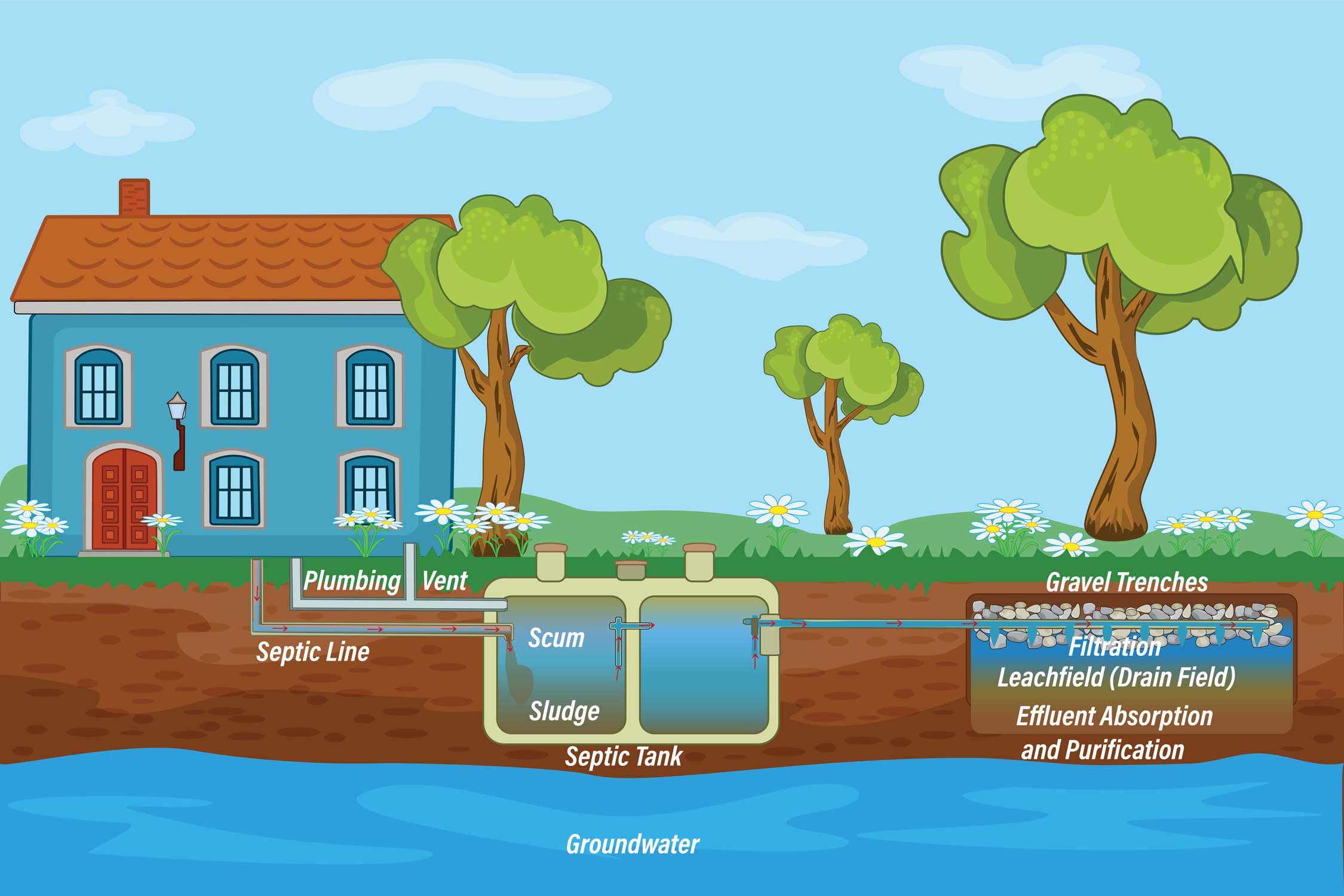

Most properties in the Abiquiu area rely on onsite wastewater systems. There is no public sewer, and conditions vary widely depending on where a property sits. What works on a mesa does not always work down along the bosque or near the Rio Chama.
I work with buyers and sellers throughout the Abiquiu area and nearby communities, and septic systems are one of the most common issues that comes up during a transaction. They are also one of the most misunderstood.
This overview explains how septic systems generally work here, and why location, permitting, and system history matter.
How septic systems work in practice
A septic system collects wastewater from a home, treats it in a tank, and then disperses it into the soil through an approved disposal system. The soil finishes the treatment process.
Because the soil is part of the system, depth to groundwater, seasonal moisture, slope, and soil type all matter. Septic systems are designed for a specific site. They are not interchangeable from one property to another.
Location matters in the Abiquiu area
Conditions can change quickly from one property to the next.
Properties on mesas often have good separation to groundwater but may deal with shallow rock or thin soils. Conventional systems are common in those settings, but only when soil depth and slope allow.
Along the bosque and in areas influenced by irrigation and the Rio Chama, the water table can be high. Seasonal groundwater, irrigation ditches, and river influence all factor into septic design. In those locations, conventional disposal is often limited or not allowed, and advanced treatment systems or alternative designs are more common.
This is why two homes close together can have very different septic systems, and why older systems do not always meet current standards.
Common system types you may encounter
The most common system in the area is a conventional septic system with a tank and a subsurface disposal area such as trenches, beds, or chambers. Some rely on gravity, while others use pressure distribution depending on site conditions.
In limited cases, older properties may have seepage pits that were permitted under earlier standards. Whether a seepage pit is allowed today depends on current separation requirements and site conditions, and many locations in the Abiquiu area would not qualify for that type of disposal system under current rules.
Advanced treatment systems are used when higher levels of treatment are required, often because of groundwater concerns or limited soil conditions. These systems can work well but typically come with ongoing maintenance and monitoring requirements that buyers should understand.
Holding tanks are also encountered in certain situations. A holding tank does not treat or dispose of wastewater. It only stores it for pumping and is regulated differently than a septic system.
How septic systems are sized
In New Mexico, septic systems are sized by bedroom count, not by the number of bathrooms, fixtures, or how many people live in the home.
That design flow determines septic tank size and the size of the disposal area. This becomes important when homes are expanded or spaces are converted. Adding a bedroom without addressing septic capacity can create compliance issues later, even if the system appeared to work fine for a prior owner.
Permits and changes to existing systems
Septic systems must be permitted by the New Mexico Environment Department before installation or modification. This includes replacing tanks, relocating disposal areas, or making changes that affect system capacity.
A septic permit applies only to the system as approved. If changes are made without authorization, the permit on file may no longer apply to the system as installed. In practice, unpermitted changes often result in the system being treated as unpermitted or noncompliant.
These issues frequently surface during inspections or property transfer evaluations.
Septic systems at property transfer
When a property is sold, onsite wastewater systems are subject to a property transfer evaluation performed by a qualified evaluator in accordance with New Mexico Environment Department requirements.
If there is no permit on record and no proof of approval, the system is treated as unpermitted. Older systems may be eligible for registration if they meet specific conditions. Systems installed or modified without permits in more recent years are held to current standards and may require inspection, exposure, or upgrades.
Septic issues discovered at transfer can affect timing, cost, and the ability to close.
Why this matters for buyers and sellers
For buyers, septic systems affect how a property can be used and what it may cost to maintain or improve. For sellers, unresolved septic issues can delay a transaction or lead to last minute negotiations.
Understanding how septic systems work in the Abiquiu area helps avoid surprises and allows these issues to be addressed earlier in the process.
Coming next
This overview is the starting point. In the coming weeks, I will go deeper into specific issues that come up often in this area, including holding tanks, unpermitted systems, and septic issues that commonly affect rural property closings.